When my book the Waterfall Diet was first published, people in the UK gave it a very high rating, but I was surprised to see that, according to some readers’ comments on Amazon.com, people in the US had mixed reactions. The book contains some recipes based on tofu and suggests soy milk as a good substitute for cow’s milk, which is not allowed in the first few months of the waterfall diet. I was amazed to see that there are people in the US who view soy foods almost like a poison. This view is largely unheard of in the UK.
This apparently strange attitude to soy seems to come from a campaign which a small group of people at the head of the Weston A. Price Foundation (WAPF) have been conducting for more than 20 years. It all started with a very unfortunate story about bird breeders in New Zealand whose baby birds developed abnormalities after being given a new feed based on soy. Their concerns were clearly valid—as far as baby birds are concerned. However, the authors began using this story as the basis for attempting to stop humans from consuming soy in any form—even soy sauce. They cherry-picked small scientific studies and extrapolations from animal research to justify this stance, while totally neglecting robust, large-scale human research that paints a positive or neutral picture. Here’s what they focused on.
WAPF Allegations
1. Rat Pancreatic Cancer: WAPF’s Claim
A 1985 study by Rackis showing that rats fed soy developed pancreatic cancer. This was interpreted as implicating soy—and particularly its protease inhibitors—in human cancer risk. (Weston A. Price Foundation, Food Smart)
Counter-Evidence:
Experts note that rats (and chicks) are uniquely sensitive to soy protease inhibitors; this finding doesn’t translate to humans. (Food Smart)
Human epidemiological studies show that, compared with meat-eaters, populations with a high soy intake (e.g. parts of Japan) have lower rates of pancreatic cancer—not higher: https://pubmed.ncbi.nlm.nih.gov/8872522/
2. Thyroid Function: WAPF’s Claim
They highlight animal models—and a small Japanese study—suggesting that just 30 g of soy per day can increase thyroid-stimulating hormone (TSH), cause goitre, or even long-term hypothyroid-like effects, even when iodine intake is adequate. (Weston A. Price Foundation, ratical.org)
Counter-Evidence:
Experts emphasize that thyroid function is affected by soy intake only if you have an iodine deficiency—not with adequate iodine intake: https://pubmed.ncbi.nlm.nih.gov/16571087/
A higher phytoestrogen intake is associated with a lower thyroid cancer risk: https://pubmed.ncbi.nlm.nih.gov/11815400/
3. Homones and Reproduction: WAPF’s Claim
Phytoestrogens (like genistein in soy) are portrayed as endocrine disruptors that cause infertility, early puberty, developmental issues, and hormone-related cancers. They reference both animal studies and human case reports. (Weston A. Price Foundation, ratical.org)
Counter-Evidence:
Contemporary reviews and meta-analyses conclude that neither soy foods nor isoflavones warrant classification as endocrine disruptors in humans: https://doi.org/10.1080/10408398.2021.1895054.
Broad human studies show no consistent negative effect of soy on male reproductive hormones, testosterone, or fertility: https://www.sciencedirect.com/science/article/pii/S0890623820302926?via%3Dihub
A 2004 study found that a traditional Japanese diet including soy products was protective against prostate cancer compared with meat eaters: https://pmc.ncbi.nlm.nih.gov/articles/PMC11159243/
4. “Birth Control Pills for Babies”: WAPF’s Claim
Soy formula supposedly exposes infants to extremely high isoflavone levels—13,000–22,000 times circulating oestrogen—comparable to the amount of oestrogen in birth control pills. (ratical.org, scdiet.net)
Counter-Evidence:
Multiple clinical and epidemiological studies show no adverse effects on growth, development, or reproduction from soy formula in humans: https://lpi.oregonstate.edu/mic/dietary-factors/phytochemicals/soy-isoflavones#safety-infant-formulas
5. Breast Cancer: WAPF’s Claim
They argue that soy promotes epithelial hyperplasia (a breast cancer precursor) and that epidemiological links are weak or manipulated. (ratical.org, eatkind.blogspot.com)
Counter-Evidence:
Cancer meta-analysis: A high intake of soy foods is associated with a reduced total cancer risk: https://www.mdpi.com/2072-6643/16/7/986.
In a study on 5,000 women in China it was found that those with the highest soy intake had the lowest risk of cancer death or recurrence, and the women with the lowest soy intake had the highest risk:
The consumption of soy foods is associated with a reduced breast cancer risk and is protective against breast cancer: https://pmc.ncbi.nlm.nih.gov/articles/PMC11356826/
A shockingly Unscientific and Damaging Message
…has been getting through to the public from the WAPF publications, basically they are saying:
Soy contains plant oestrogens. Most cases of breast cancer are caused by excessive oestrogen. Therefore if you don’t want to get breast cancer, you had better avoid soy.
This message is reinforced in the public’s mind because of constant media references to “plant oestrogens”. Even leading figures in the natural medicine movement who really should know better seem to have accepted this crassness without fact-checking it:
Joseph Mercola, DO – Alternative health website owner who has published numerous anti-soy articles, often referencing Fallon, Daniel, or WAPF.
Mike Adams (“Health Ranger”) – Natural News founder, has promoted extreme anti-soy claims citing WAPF literature.
Is there really Oestrogen in Soy?
Jeffrey Bland PhD, sometimes known as the father of functional medicine, has a wealth of knowledge about the biochemistry of soy and female hormones. Here’s what he says:
“Soy isoflavones are not oestrogens but oestrogen modulators or balancers. This means they have binding proteins which can latch on to excessive oestrogen in a woman’s body and block it from doing harm. If there is not enough oestrogen around, they also have a weakly oestrogenic effect which can help to make good the deficit.”
Beneficial Effects of Soy Isoflavones
Whole soy foods typically provide 1.0-3.5 mg isoflavones per gram of protein.
Menopause Symptoms
Multiple studies show that soy isoflavones can help reduce both the frequency and severity of hot flushes.
The research shows:
Soy isoflavones help blood vessels dilate, allowing better heat release from the skin
When supplemented, daily doses of 30-200 mg show benefits
Bone Health and Osteoporosis
Postmenopausal women are at high risk for osteoporosis (weak bones) due to declining oestrogen levels. Studies show soy isoflavones can help:
Increase bone formation by stimulating bone-building cells
Reduce bone breakdown
Improve bone mineral density, especially in the spine and hip
Help prevent osteoporotic fractures
Heart Health
Oestrogen deficiency after menopause increases cardiovascular disease risk. Soy isoflavones may help by:
Reducing total cholesterol and “bad” LDL cholesterol
Lowering triglycerides
Improving blood vessel function
Reducing arterial stiffness
Decreasing oxidative stress (cell damage)
Cancer Protection
Research indicates soy isoflavones may help protect against certain cancers, particularly breast cancer:
A higher soy intake is associated with reduced breast cancer risk
May help prevent cancer recurrence in breast cancer survivors
Appears to reduce overall cancer mortality
May protect against other hormone-related cancers.
Dr Bland also points out that the protective effect of soy against breast cancer largely depends on the conversion of soy isoflavones to an oestrogen regulator known as equol. This conversion is carried out by intestinal bacteria. It means that a healthy intestinal microbiome is also important. https://jeffreybland.com/knowledgebase/august-2006-issue-neil-shulman-md/
Other Benefits
Soy isoflavones may also help with:
Blood sugar control: Improving insulin sensitivity and glucose metabolism
Urogenital symptoms: Helping with vaginal dryness and some urinary issues
Antioxidant effects: Protecting cells from damage throughout the body
Source: https://jeffreybland.com/knowledgebase/april-2003-issue-scott-rigden-md-family-preventive-medicine/
Soy and Environmental Oestrogens
Many pollutants, pesticides and plastics exert harmful effects on the body by acting as oestrogen mimics. They are known as endocrine disruptors, and include:
Bisphenols (BPA, BPS, BPF)
Phthalates (DEHP, DBP, etc.)
Pesticides (Atrazine, DDT, Vinclozolin)
PCBs (Polychlorinated Biphenyls)
Dioxiins
PBDEs (Flame Retardants)
Parabens
Triclosan and Triclocarban
PFAS (“Forever Chemicals”)
UV Filters (Oxybenzone, Octinoxate in sunscreens)
Alkylphenols (Nonylphenol)
Heavy Metals (Cadmium, Lead, Mercury)
In light of soy’s ability to occupy oestrogen receptors in the body, thus modulating the effects of excess natural oestrogen, I was curious to find out whether there is any research which shows a similar effect against environmental oestrogen mimics.
I was very surprised to find that indeed there is. Here’s what I found:
Patisaul et al. (2012) – Rats exposed to BPA became more anxious and had brain changes, except when they were fed soy, which prevented those effects. https://pubmed.ncbi.nlm.nih.gov/22957036/.
Jones et al. (2015) – A chemical from plastic (DEHP) harmed the testicles of newborn male rats, but genistein from soy protected them, likely by reducing oxidative stress. https://pubmed.ncbi.nlm.nih.gov/26316063/.
Dong et al. (2020) – DEHP had adverse effects on rat metabolism, but soy isoflavones partly prevented the damage, especially to fats and antioxidant systems. https://pubmed.ncbi.nlm.nih.gov/32131955/
Gao et al. (2021) – BPA damaged the ovaries of hens and reduced egg production. By boosting antioxidants, genistein from soy achieved the opposite and undid the damage caused by BPA. https://pubmed.ncbi.nlm.nih.gov/34363818/
Zheng et al. (2013) – In this study, BPA and DEHP caused abnormal human nerve cell proliferation. Genistein stopped this growth completely. https://pubmed.ncbi.nlm.nih.gov/23761822/
Chavarro et al. (2016) – In a study of 239 women undergoing IVF treatment, dietary soy intake was assessed along with urinary BPA levels. In women who did not eat soy, higher BPA was associated with fewer pregnancies and live births. On the other hand a soy-rich diet appeared to neutralize BPA’s negative reproductive effects. https://pubmed.ncbi.nlm.nih.gov/26815879/
What are the Best Soy Foods?
It is essential to buy only organic soy foods. Soy is one of the foods most likely to be genetically engineered. We have absolutely no idea of the potential long-term effects of consuming GE soy. Even organic doesn’t protect us completely, since seeds and pollen can carry on the wind and contaminate organic crops.
Secondly, I would caution against buying highly processed soy products, such as soy protein isolate, soy isoflavone supplements and imitation meat products made from soy. I haven’t specifically researched any potential harmful effects, but personally I stick to organic soy milk, tofu and tamari sauce (a gluten-free version of soy sauce), and organic soy beans.
Soy Allergy / Intolerance
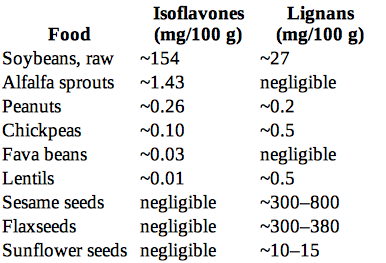
Many people get strange reactions such as headaches and rashes from consuming common foods. The reactions are usually due to an intolerance to gluten or dairy products, but some people react to soy. If you are one of them, you’ll be glad to know that several alternative plant foods contain isoflavones, and others, such as sesame and flax seeds, are good sources of lignans, which also have oestrogen-modulating properties.

Linda Lazarides is a reknowned naturopathic expert and author of A Textbook of Modern Naturopathy. Her in-depth health articles are now being published in the Health Learners Club. All are welcome to join and read weekly expert articles. You will also have access to a chat lounge where you can find more information, ask questions and post requests and suggestions.